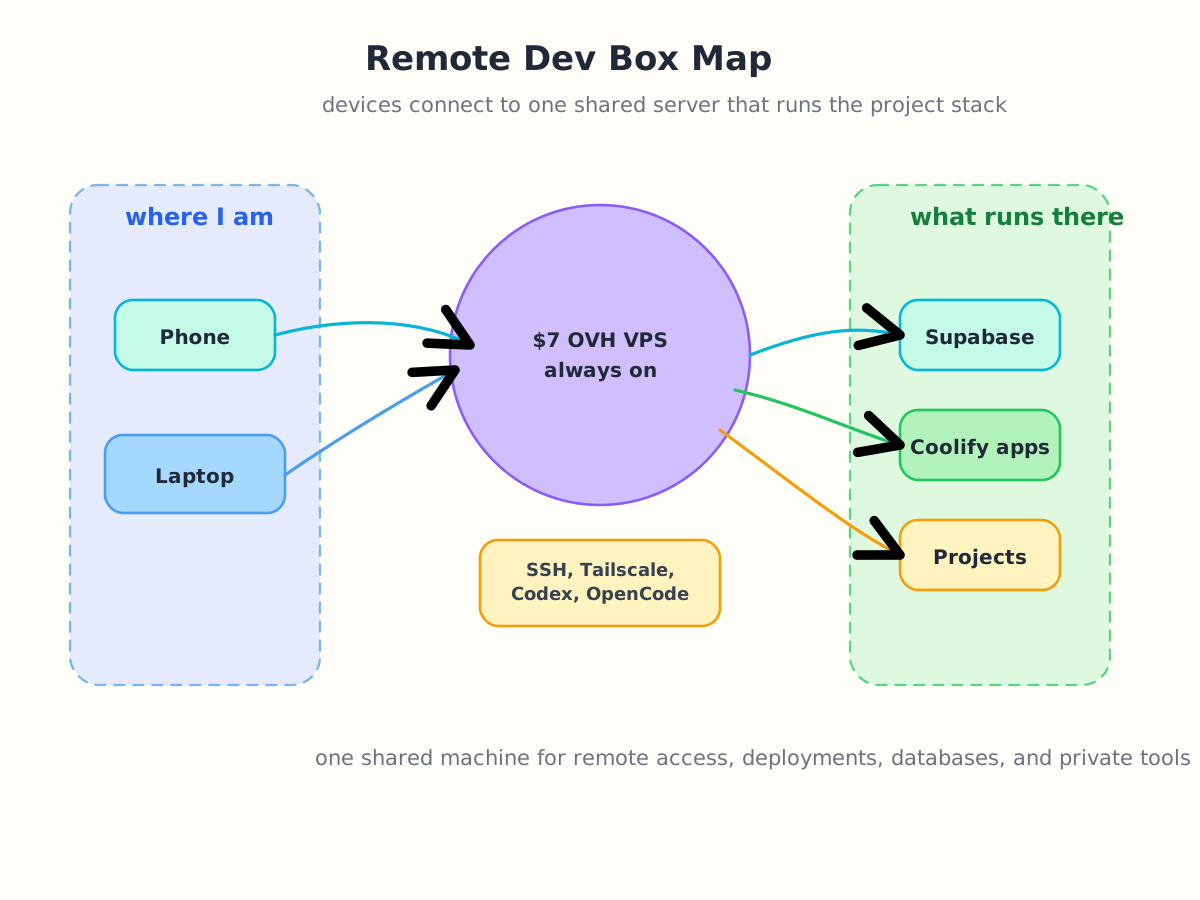
I set up an OVH VPS that costs about $7 a month and now use it as a small remote development box.
The machine runs the core services I want available outside my laptop: self-hosted Supabase, Coolify, OpenCode, Tailscale, SSH access, and Codex Remote. The goal is simple: projects can keep running on a server, while I connect from a laptop, phone, or another location.
1. The Setup
A small VPS with public services and private tools.
The server is an Ubuntu box with Docker, SSH, Tailscale, Coolify, OpenCode, Codex Remote, and self-hosted Supabase.
Coolify manages project deployments, domains, and HTTPS.
Supabase provides Postgres, auth, storage, and the Supabase dashboard.
Tailscale keeps internal tools private. OpenCode can run on the VPS and be reachable from my devices without exposing it directly to the public internet.
The setup has three lanes:
- public services, like deployed apps and Supabase endpoints
- private tools, like OpenCode and SSH
- management tools, like Coolify and Codex Remote
This gives each project a deploy target, a database, and a stable URL without depending on my laptop being open.
2. Async Agents
Move agent work from the laptop to a remote machine.
Most local development starts with a repo, a local database, and a few terminal tabs on one laptop.
That works until the task needs to run longer, access a server-only service, or continue while the laptop is closed.
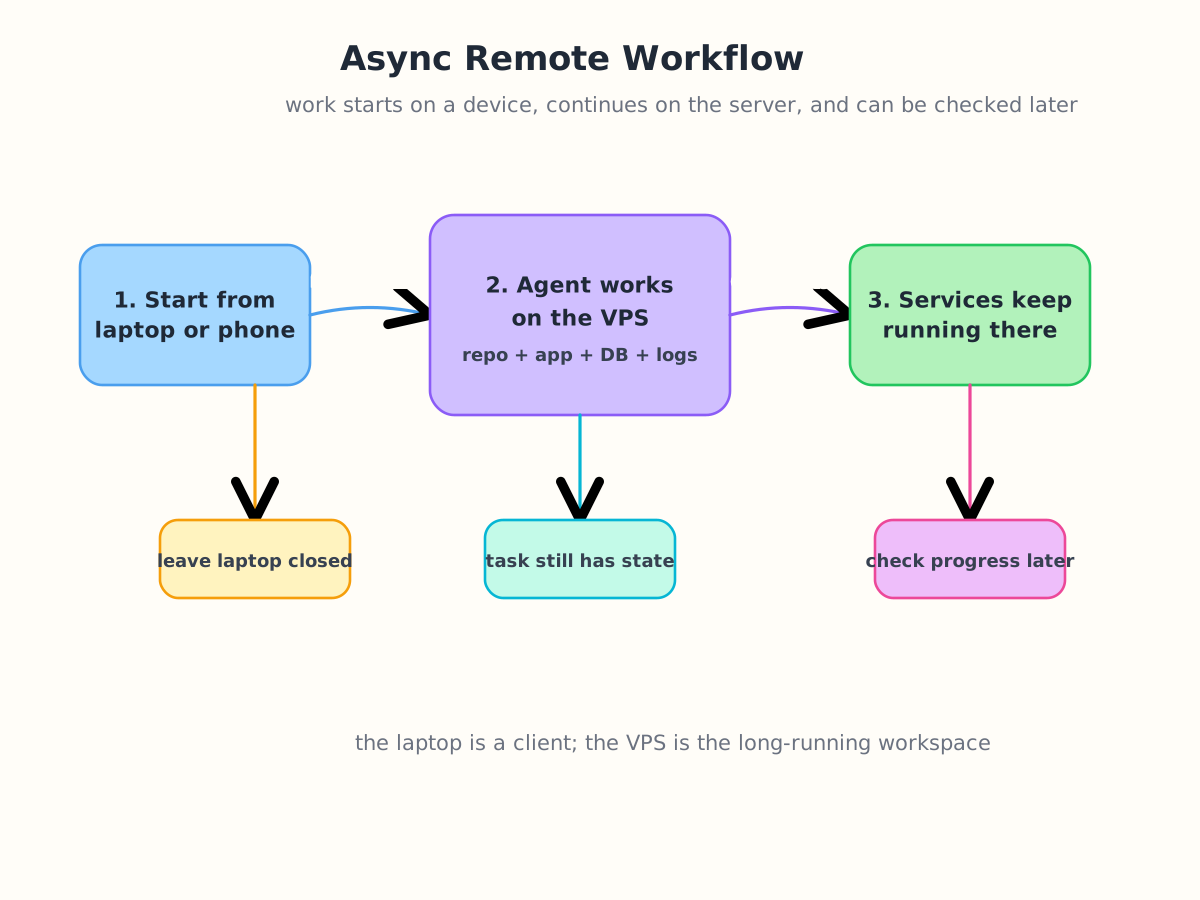
Running the project environment on a VPS changes that. The laptop becomes a client. The server holds the repo, app process, database, logs, and deployment tools.
Codex can connect to the server over SSH and work inside that environment. OpenCode can run as a private web surface accessible from a laptop or phone through Tailscale.
That makes agent work more asynchronous:
- start a task from the laptop
- let it run against the remote project environment
- check progress from another device
- keep long-running services on the server
- avoid tying every task to a local terminal session
This is not replacing local development. It is adding a remote workspace for the parts of development that benefit from being always on.
3. The New Price of Software
Agents lower the labor cost of self-hosting.
The cost comparison becomes more interesting with self-hosted Supabase.
Hosted Supabase is still the easier default for production systems that need managed backups, support, uptime expectations, and less operational responsibility.
For personal projects, prototypes, and internal tools, self-hosting Supabase on the same VPS can be much cheaper.
The other cost is labor. Setting up DNS, servers, auth, TLS, dashboards, and deployment tools used to be a major reason to avoid self-hosting. Agents change that cost structure. I used Codex with computer use to help set up the OVH account, DNS, Coolify, Tailscale, OpenCode, and Supabase. It could use the browser, read docs, SSH into the machine, test URLs, and record what changed.
That does not remove maintenance. I still own updates, backups, monitoring, and security. But it reduces the setup cost enough that self-hosting becomes more practical for small projects.
As of May 2026, Supabase Pro starts at $25/month for the first project, with additional projects starting lower inside the same plan. It includes an 8GB database disk, 100GB of file storage, and compute credit that covers the Micro instance. Supabase’s Large compute tier is listed at $110/month for an 8GB RAM database instance. OVH’s current VPS page lists a small VPS from about $6.46/month with 4 vCores, 8GB RAM, and 75GB SSD on the OVH VPS page. My actual box reports 4 CPUs, about 7.6GiB RAM, and a 72G root disk.
This is not perfectly apples-to-apples because hosted Supabase includes managed service value. Still, the rough markup is useful:
| Setup | Approx monthly cost | Rough markup vs OVH | What you get | Tradeoff |
|---|---|---|---|---|
| Supabase Pro floor | $25 | 3.9x | Hosted first project, 8GB database disk, 100GB file storage, Micro compute credit | Managed and polished, but higher floor cost |
| Three separate Pro project floors | $75 | 11.6x | A simple mental model if experiments each become their own paid managed project | On one Supabase plan, additional projects can start lower |
| Supabase Pro with 8GB compute class | About $125 | 19.3x | Pro plan plus the Large compute tier listed at $110/month, offset by the included compute credit | Similar RAM class, but priced as managed infrastructure |
| My OVH box | About $7 | 1.0x | 4 CPUs, about 8GB RAM, about 72GB usable disk, plus room for Coolify, OpenCode, and self-hosted Supabase | Cheap and flexible, but I own maintenance, backups, and security updates |
Managed services are still valuable. The markup buys reliability, support, operational tooling, and fewer maintenance tasks.
The difference is that agents make the self-hosted path easier to operate. A prototype can get a real database, auth, storage, jobs, logs, deployments, and private remote tools without immediately turning into another monthly SaaS bill. More importantly, each small extra project does not have to become another separate $25 managed-project floor. Several small projects can share the same server until CPU, memory, disk, or operational risk becomes the real constraint.